NCAA Football
As legislation around college sports falls apart in Congress, player leaders call for something bigger: collective bargaining
Source
bostonglobe.com
Trahan’s major issue with the SCORE Act is that she believes it will negatively impact women’s programs and Olympic sports — pretty much anything outside of football and men’s basketball. The legislation has been endorsed by the NCAA and major conferences as college sports leaders continue their years-long effort to get Congress to clear the way for the NCAA to establish antitrust protection.
The SCORE Act, which stands for “Student Compensation and Opportunity through Rights and Endorsements,” has twice in the past year been on the House of Representatives’ agenda before Republican leaders opted not to take it to a vote because it would likely not pass. On Monday night, Tuesday’s vote was canceled after the Congressional Black Caucus came out against it.
Massachusetts congresswoman Lori Trahan (D-Lowell), a former Division 1 volleyball player, has positioned herself as a fierce opponent of the proposed legislation around college sports.
The SCORE Act that was set to be voted upon reportedly had language that would create guardrails around name, image, and likeness compensation in the wake of the 2021 Supreme Court ruling that indicated the government would no longer allow the NCAA to consider its athletes as amateurs, as well as limits on how coaches could be hired and how buyouts would be funded. In addition, the SCORE Act would have created a sort-of salary cap for NIL, regulate compensation for player agents, and enact the proposed five-year eligibility rule that NCAA president Charlie Baker hopes to get approved soon.
But during a Tuesday news conference, Trahan’s biggest emphasis was that the SCORE Act would have prevented collective bargaining — something a number of female NCAA athletes are saying is a necessity.
“The SCORE Act is being sold as a fix for college athletics,” Trahan said. “It’s not. It hands the NCAA and conferences a sweeping antitrust exemption in perpetuity.”
On Capitol Hill, Trahan said she has offered a proposal called the College Athletics Reform Act that she says would address problems around NIL, agent compensation, women’s sports, and athlete health. And in the Senate, Ted Cruz and Maria Cantwell are reportedly working on bipartisan legislation that may pick up steam now that the House has opted not to take a vote.
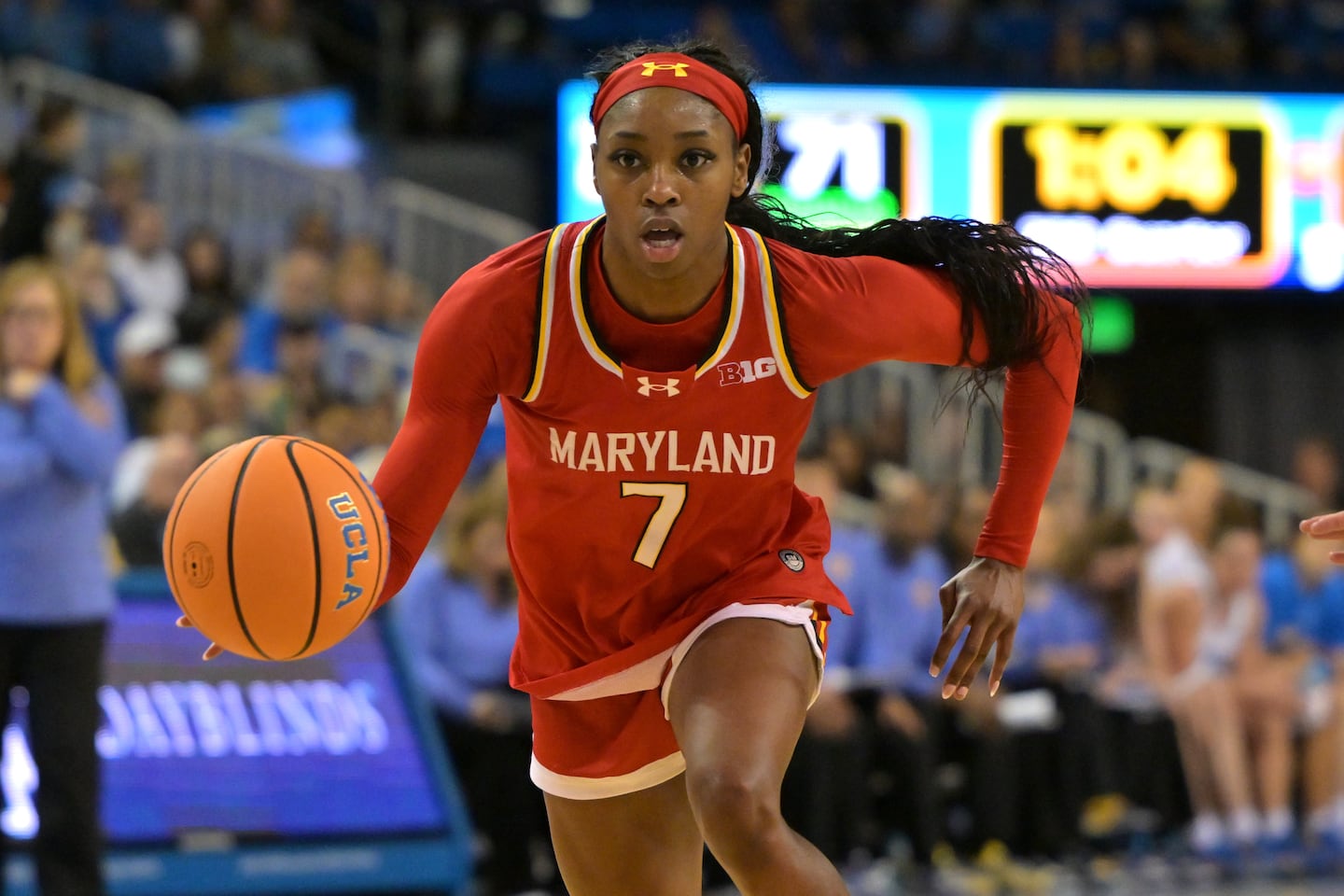
Massachusetts native Oluchi Okananwa spent a season playing for Peabody High School before transferring to New Hampton Prep and later Worcester Academy. She began her college basketball career at Duke and transferred to Maryland after two seasons, helping to lead the Terrapins to the Sweet 16, averaging a team-high 17.8 points in the regular season.
And she’s also one of the player leaders of the United College Athlete Association, a nonprofit founded in 2021 that is working to get female athletes a voice amid the debate around the future of college sports.
“The NCAA has not been taking care of us,” Okananwa said Tuesday. “In fact, they’ve been doing the complete opposite … We need a legally binding position on a level playing field with the NCAA to negotiate our rights and working conditions. College sports are professional sports, and there is an obvious solution that works for every other major sports league in America, giving players a performer seat at the table. It’s obvious that we are not just student-athletes, that myth has surely been debunked. We are professionals.”
Andrew Cooper, a former college track athlete, is the founder of the UCAA and said he thinks collective bargaining would solve some of the problems the NCAA is facing that has prompted it to turn to Congress.
“College sports needs to embrace a professional infrastructure with collective bargaining, just like every major professional sports league in America,” he said. “Collective bargaining provides universities with the stability they seek from antitrust laws, in the form of salary caps, transfer limits, tampering punishments.”
Baker penned an op-ed for The Hill last week calling for Congress to pass the SCORE Act, writing that most students do not want to become employees of their schools.
“Student-athlete leaders from every division oppose this outcome because it would likely be catastrophic for their programs,” he wrote.
But on Tuesday, Okananwa said that was not the case.
“It’s honestly comical to have them say that we don’t want to be seen as employees when we’re kind of already operating as employee workers,” she said. “Our sport is at the center of everything that we do, especially with our time here at the university ... I think it’s time, and they know it’s time, to come to the truth, which is that we are employees. We should be treated as such.”
Katie McInerney can be reached at katie.mcinerney@globe.com. Follow her on Instagram at @katiemac.sports.