Soccer
Foxborough police chief explains reasoning behind security measures for World Cup games at Gillette Stadium
Source
bostonglobe.com
“The initial intel is that there’s going to be large demographics of people coming from outside of the country, which means that they’re not just going to show up for one match and leave, they’re going to stay — I think the average is 7-10 days, that’s the data that was revealed to us,” said Grace in an interview with the Globe. “That is definitely very different than going to a Taylor Swift concert in Foxborough and then going down to New Jersey.”
Foxborough police chief Michael Grace went into some detail Tuesday in order to explain why the small town needed to make such big asks on the security front.
Half the drama of Foxborough’s successful battle against FIFA and the Kraft Group revolved around meeting the timeline for obtaining security equipment the town needs for seven World Cup games at Gillette Stadium this summer.
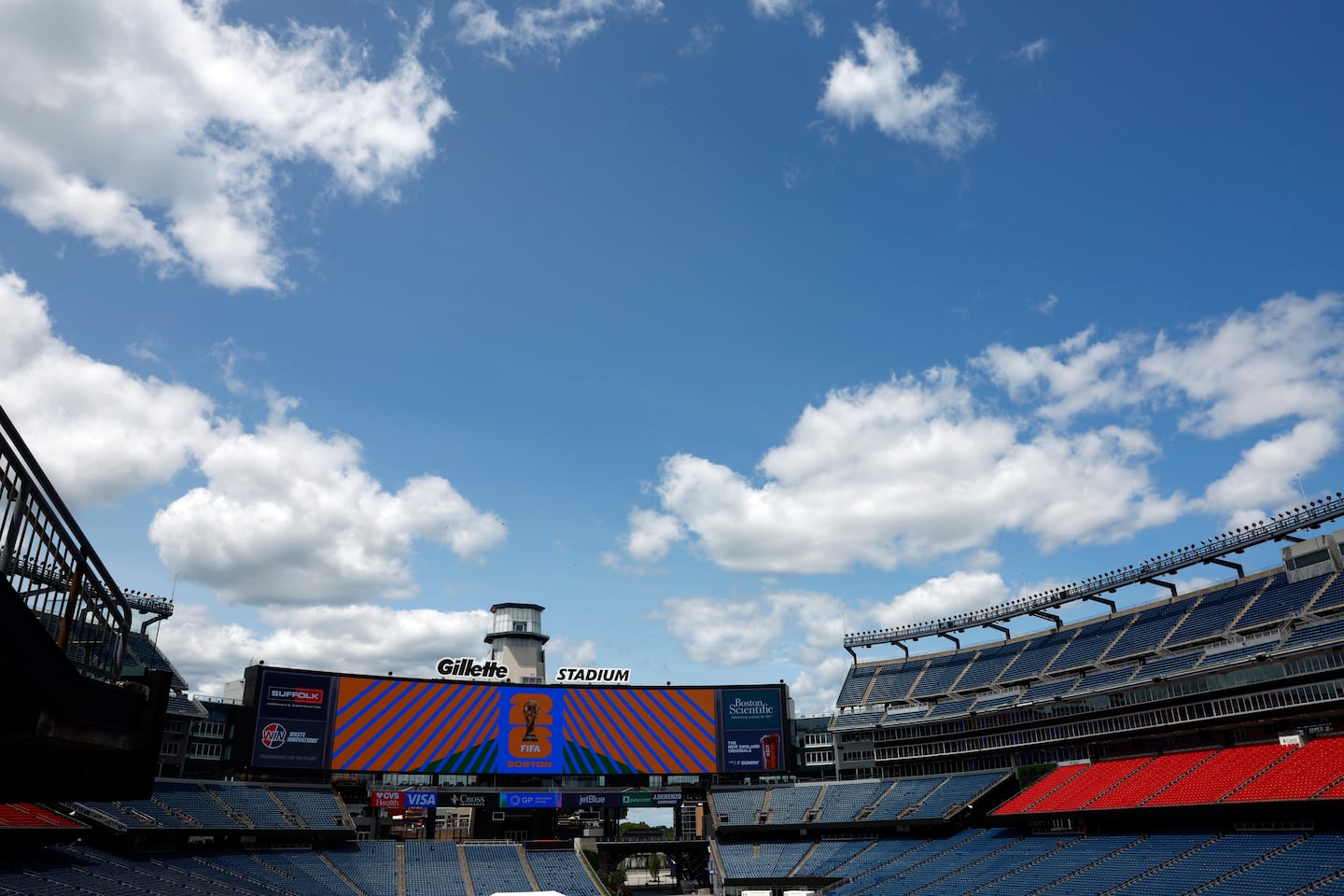
With players from at least 10 countries playing and practicing at the stadium, plus referees, FIFA officials, VIPs, and potentially heads of state all converging on the Norfolk County town, Grace is taking “a very sound operational model” used in all stadium events and adding more layers to it on what’s being called “the last mile” to ensure the games go off without a hitch.
Planning has been in the works for more than a year with a long list of state agencies as well as the Department of Homeland Security, which is playing an oversight role on security in all 11 host cities in the United States.
“We’re not reinventing the wheel, we’re just adding different sections to it to enhance an already solid operation,” said Grace. “We’re not going to be in crisis mode, we’re going to be in operational mode.”
The Globe has reported that BearCat armored tactical vehicles, anti-drone technology, gunshot detectors, and sophisticated radio and communication technology are on a list of enhanced equipment that Grace and the fire department determined, after consultation with federal and state officials, were necessary to meet the security requirements. The 39-day span of the tournament qualifies as a Special Event Assessment Rating (SEAR) 1 event, which according to DHS means it is a “significant event with national and/or international importance that requires extensive federal interagency support.”
The Globe reported that the Kraft Group and state officials raised eyebrows at the idea that Foxborough had to purchase the equipment versus borrowing some of it.
Grace defended the purchase strategy of a town tasked with securing the largest open-air venue in the state.
“We’re so unique,” he said. “We’re not like any other town. We are the police department running a municipality of almost 20,000 people but then we turn into a city. This clearly was the best solution on what was needed and what had been identified in our grant application that we did in November.”
He added that operationally, the rent or loan option “wouldn’t even have worked, it wasn’t even compatible, it didn’t meet the standard that we needed operationally to be successful.”
He added that 90 percent of the equipment could not be loaned from the state and that if it had been loaned, “you can’t be stripping all of your assets statewide and then offering equipment that is inadequate” elsewhere in the state should the need arise during the tournament.
Grace said support from the federal government “has been absolutely just stunning” and that it has been “constantly reaching out and supporting any of the planning that is ongoing.”
There has been no mention of Immigration and Customs Enforcement agents being deployed to help with security at the games.
“That part has not even been on the radar or even discussed or even built into any of the operational plans,” Grace said.
Grace did not admit to frustration at the protracted negotiations between the town’s select board, FIFA, and the Kraft Group over the town’s refusal to pay the security costs upfront.
Perhaps it could have been predicted given the injection of a new entity — FIFA — with a history of maintaining tight control over how to run its events.
“In the fall, from Foxborough’s perspective, we were working hand in hand, business as usual, with our partners at the Kraft Group on the planning and funding components until the sublease of the stadium with FIFA,” said Grace. “Then we had to pivot as a municipality to ensure that the standard already established with the Kraft Group was also going to be equal with the new applicant.”
The pivot took some time.
“It had to get done,” said Grace.
Michael Silverman can be reached at michael.silverman@globe.com.