MLB
Dodgers’ Yoshinobu Yamamoto’s training cycle geared toward MLB stretch run
Source
nypost.com
TEMPE, Ariz. — The season ahead will be demanding, perhaps the most demanding of Yoshinobu Yamamoto’s career.
The World Baseball Classic next month. Another six-month MLB regular season. And if the Dodgers reach the heights they expect to reach, another three or four postseason series.
All of this after a playoff run in which Yamamoto pitched complete games in consecutive starts and threw the final 2 ⅔ innings of Game 7 of the World Series a day after starting Game 6.
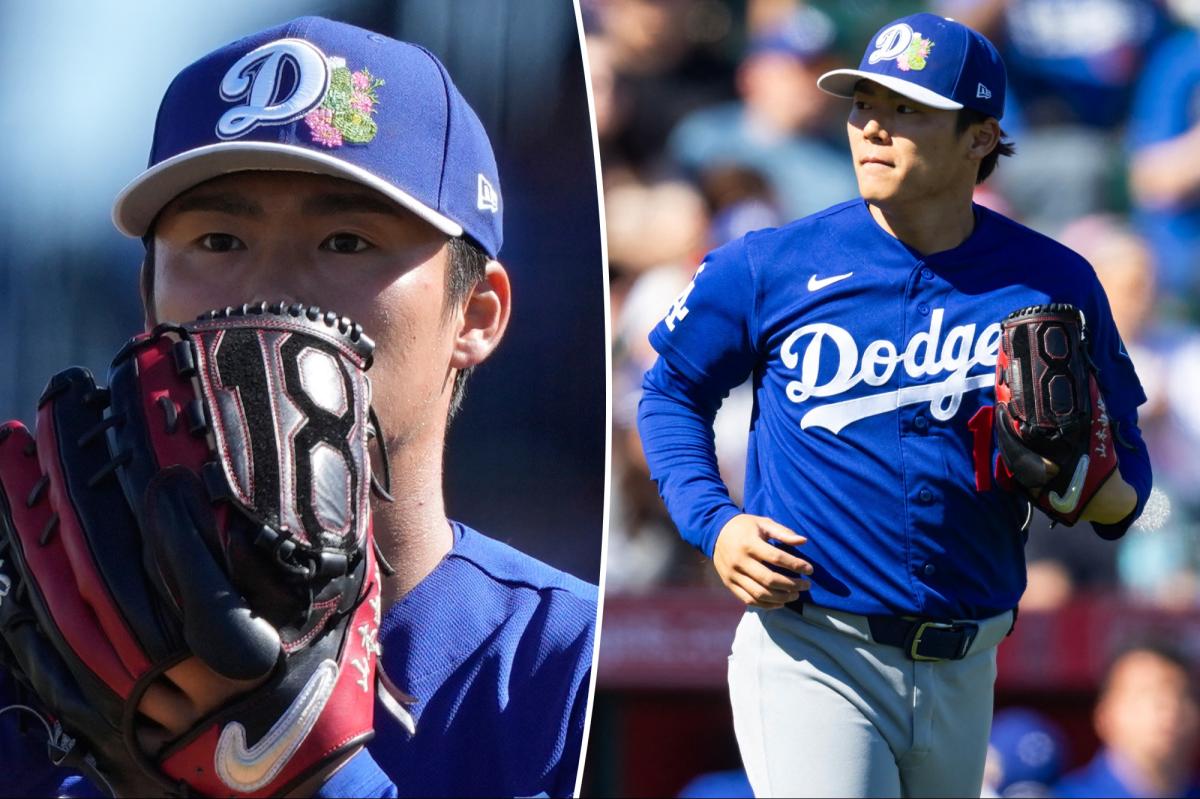
As Yamamoto fielded questions on Saturday about the 1 ⅔ innings he pitched against the Angels in the Dodgers’ Cactus League opener, a slender figure in a sweatsuit was on the other side of the visiting clubhouse of Tempe Diablo Stadium explaining why the right-hander would remain healthy over the next eight months.
“There isn’t a person without worries,” Osamu Yada said in Japanese. “But I think we’re at a point now where we have slightly more peace of mind than concerns.”
Yada has trained Yamamoto since he was a teenager on the Orix Buffaloes of the Japanese league, transforming him from a novice who required 10 days between pitching appearances to a workhorse capable of pitching on consecutive days. He has never instructed Yamamoto to lift weights, instead prescribing an unorthodox workout routine that includes handstands, back bridges and javelin throws.
However backbreaking the upcoming season might be, Yada said, Yamamoto’s winter was even more tiring. Yamamoto worked out under Yada’s watch six times a week, six hours at a time.
“In December, January,” Yada said, “he pushes himself to the point of complete exhaustion.”
The training program isn’t designed so that Yamamoto can take his turn in the rotation every six or seven days. The regimen is structured so that Yamamoto can peak in the second half of the season.
As for Yamamoto’s noticeable increase in muscle mass, Yada said that happened naturally.
“He really didn’t do anything to get bigger,” Yada said.
The trainer joked that Yamamoto was like the dominant monkey on a mountain.
“Right after he becomes the boss, he becomes bigger,” Yada said with a chuckle.
Yamamoto earned boss status last season, as he went into the offseason as the World Series MVP. Shohei Ohtani crowned him the best pitcher on the planet, and manager Dave Roberts has mentioned him several times as a Cy Young Award candidate.
But the last Dodgers pitcher to have a similar postseason is the ultimate cautionary tale.
Before there was Yamamoto, there was Orel Hershiser. Now 67 years old, Hershiser was the hero of the 1988 World Series. The entire postseason consisted of only two rounds back then, but Hershiser made five starts, the last three of which were complete games. He also closed out a game in the National League Championship Series.
Hershiser’s legacy is that of not only extraordinary achievement but also its cost. Two years after Hershiser was the World Series MVP, he blew out his shoulder.
Download The California Post App, follow us on social, and subscribe to our newsletters
Roberts has decided to not be overly preoccupied about Yamamoto’s health, however. No matter what the Dodgers said, Yamamoto was determined to represent Japan at the World Baseball Classic.
The previous two years give Roberts confidence that Yamamoto won’t extend himself to where he would jeopardize his health, even though Yamamoto missed three months in 2024 with shoulder problems.
“It’s from the day we signed him, how intentional he is about his work and his body care,” Roberts said.
Besides, Roberts said, “There’s no science on ramping up early.”
Yamamoto touched 94.9 mph with his fastball against the Angels, striking out two batters in a 1-2-3 first inning. But he cooled down during a six-run second inning for the Dodgers, and a dropped fly ball by left fielder Teoscar Hernandez contributed to him giving up two runs (one earned) in the bottom half of the frame.
Yamamoto said he would make another Cactus League appearance before joining the Japanese national team’s training camp in Osaka. He is expected to start his country’s WBC opener on March 6 against Taiwan.
Yada is comfortable where Yamamoto is, thinking he can more or less predict how Yamamoto will feel at various points in the season. Yada compared Yamamoto’s offseason work to a seed that is planted in the soil.
“In the spring the plant sprouts, in the summer the flowers bloom and in the fall the fruit appears,” Yada said. “The same thing happens here. After a number of years, you start to understand how the cycle unfolds throughout the year.”
Yada pointed to the end of the summer.
“Please look forward to it,” he said with a polite bow.
Yamamoto should be peaking then.