UFC
Dana White Thinks Everyone Is a Fighter—Especially Donald Trump
Source
newyorker.com
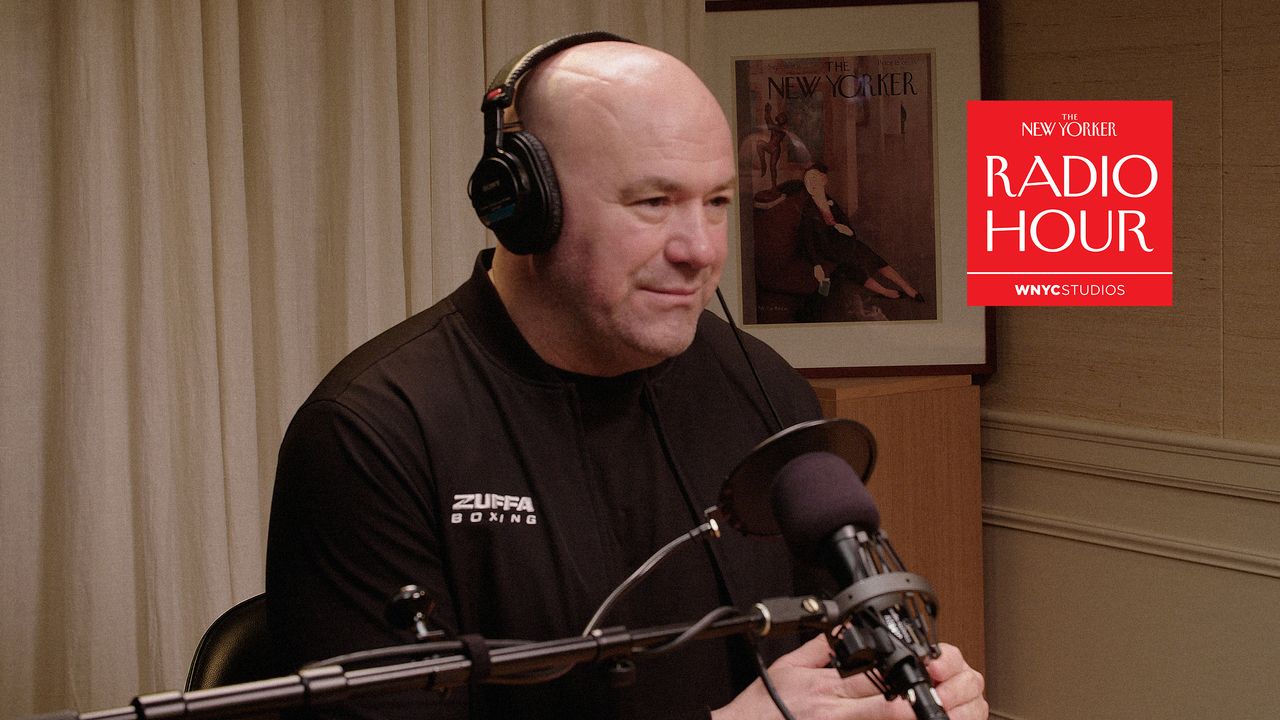
White is the latest impresario to profit enormously from the fascination that human beings have always had with watching other human beings fight. Like Tex Rickard, who made a fortune promoting Jack Dempsey’s bouts in the twenties, or Don King, the high-haired gonif whose era spanned Muhammad Ali and Mike Tyson, White is a promoter of controlled violence. Head shaved, muscle-bound, and full of bad-boy chesty charm, he is as recognizable in the U.F.C. universe as any one champion. He is also a man of the political moment. In Trumpworld, he is lionized, ubiquitous, as loyal to the President in his way as Stephen Miller. When White came by our studio and spoke with me for The New Yorker Radio Hour, he’d just had dinner with Trump and was happy to talk about it. U.F.C. rules, such as they are, are minimalist. Fights take place in a fenced-in octagon. They are nasty, brutish, and short. Ears are routinely cauliflowered, noses fractured, limbs shattered. Referees can be seen waving a frantic conclusion to the proceedings just as one fighter is choking another to the point of blackout. Losers often exit the octagon wobbling, smiling, fogged, concussed. The crowds, in their enthusiasm, in no way resemble those at an August doubleheader. The fevered response from the stands is part of the spectacle. While pro football remains the preëminent American sport, one of the last remaining facets of a fractured monoculture, the U.F.C. has soared in popularity, filling vast arenas and becoming a fixture of the streaming services. White, now fifty-six, grew up in working-class Massachusetts. He wanted to be a professional boxer but thought better of it when he took his health into consideration. His old friends and business partners, the Fertitta brothers, bought the U.F.C. for two million dollars, in 2001, and made White their front man, giving him an equity stake. The group sold the U.F.C., in 2016, to a consortium led by WME-IMG, for four billion dollars. White is now reportedly worth as much as half a billion dollars and continues to pull in a salary of twenty million dollars to run the show. Our conversation has been edited for length and clarity. How did you get into this? I was a big fan of boxing and grew up loving boxing. It was my favorite sport. And I went to high school with these guys, the Fertitta brothers. They owned Station Casinos in Las Vegas. You grew up on the East Coast, and then you moved to Las Vegas. I moved to Las Vegas when I was in fifth grade, and I ended up going to high school with these guys. And one night, Frank Fertitta and I were at the Hard Rock in Las Vegas, and there was a fighter there named John Lewis, who fought in the U.F.C., and he had a jujitsu school. And Frank said, “I’ve always wanted to learn jujitsu.” So we went over and talked to him. We set up a private lesson on Monday, and we became obsessed. We started training four or five times a week in jujitsu and through that we started to meet a lot of the fighters that fought in the U.F.C., and we were blown away. Most of these guys . . . you know, it wasn’t the same story as boxing. The boxing story is, “I came from the mean streets of such and such, and if it wasn’t for boxing, I’d be dead or in jail.” The complete opposite with U.F.C. fighters.
If your parents put you in martial arts when you were young, your parents had money. Martial-arts training isn’t cheap. And a lot of these guys were college wrestlers, so they all went to college. Like Chuck Liddell. Do you know who Chuck Liddell is? The stereotypical ultimate fighter. He’s got a Mohawk, big, mean-looking guy with a Fu Manchu. He looks like an axe murderer, if you saw the guy. He graduated from Cal Poly with a degree in accounting. [Laughs.] So these were the type of guys that were fighting in the U.F.C., and I thought that their stories were very interesting. And the truth is, if you’ve ever been to a U.F.C. fight, it is the most exciting live sporting event you’ll ever see. There’s so many different ways to win and lose, and just the energy and the buzz inside the building is amazing. What do you mean there’s so many ways to win and lose? So, in boxing, I punch you to the head or body more times than you punch me to the head or body, and I win, or I knock you out. In the U.F.C., you can do all of that, too, but you can also kick, knee, elbow. It can go to the ground where you fight for submissions. So it’s non-stop action. I wrote a book about Muhammad Ali long ago. I think we both agree he might be the greatest athlete who ever lived— Who’s the Muhammad Ali of the U.F.C. in your estimation, and why? Well, we have a guy named Conor McGregor, who I would say is like our Muhammad Ali. But, if you’re looking for your Michael Jordan, it would be Jon Jones, who is the greatest. Jon Jones has never been beat, and he’s moved up and down weight classes. It’s very, very unique and hard to be undefeated in the U.F.C. How did you buy U.F.C.? Because you seem to, in retrospect, have bought it for a song. Yeah, two million dollars. When we were training in jujitsu, and we started to meet a lot of the fighters, I started to manage some of the guys. And I got into a contract dispute with the old owner, Bob Meyrowitz, and Bob said, “You know what? There is no more money, O.K.? I don’t even know if I can afford to put on the next event.” We hung up and I said, “Wow, that’s interesting.” I called my partners, Lorenzo and Frank Fertitta, and said, “I just got off the phone with the owner of the U.F.C. I think they’re going bankrupt. They’re in trouble, and we should buy them.” Wasn’t it kind of risky? You had Senator John McCain—who’s nobody’s idea of a wimp, God knows—call M.M.A. “human cockfighting.” How do you respond to that? I think that without Senator John McCain I probably wouldn’t be sitting here having this conversation with you right now. His stance on the U.F.C. drove them toward—and not only them, but us, when we bought it—toward regulation and being regulated by the athletic commissions in each state. [He holds his hands close together.] This many people want to see a freak show. [He holds his hands far apart.] This many people want to see a real sport. It used to be banned in thirty-six states. What were the regulations put into place so that it was no longer a freak show? What sort of tripped them up early was them sensationalizing it, like, “Two men enter the octagon, one man leaves: the most brutal, bloody, violent sport in the world. There are no rules!” That’s just hype. You hear that in boxing, too. When the first one was coming, nobody believed it was true. They’re, like, “There’s no way this could be real, that this is going to happen.” And it was real. It did happen. And everybody tuned in because of the sensationalism, but that eventually ended up biting [Meyrowitz] in the end. Because Senator John McCain went after it and said it was disgusting. Think about, at this time—again, when you and I grew up, right?—John Wayne movie. John Wayne would hit a guy, right? Guy would go down. John Wayne didn’t jump on top of him and start pounding him. He’d stand him back up and he’d hit him again. You didn’t do that. You didn’t jump on a guy when he was down.
At what point do the referees jump in and stop the proceedings? Because sometimes, somebody will go down, and then the other fighter will jump on him and start punching him mercilessly in the head. It’s the fighter’s job to keep going, I assume. It’s the referee’s job to do what? It’s the fighter’s job to protect himself at all times. And, if the referee feels like he can’t anymore and the fight needs to be stopped, he stops it. No different than boxing. I mean, you’ve seen some boxing fights where the guy’s out on his feet, he goes down— Yeah, but I’ve seen some terrible, terrible refereeing. I agree. You’ll see it in the U.F.C., too. There’s terrible refereeing sometimes in the U.F.C. But you’re saying it’s terrible because they’re too hesitant to stop it or too quick to stop it? Both. Sometimes they’re too quick; sometimes they’re too late. There’s terrible refereeing in boxing, U.F.C., basketball, the N.F.L. I mean, you’re always going to have some human error. What is the breakdown of fans: men and women? Well, a lot more women now than there were in the beginning. In the beginning— Because you have women fighters, too. My base was males, eighteen to thirty-four. It was a no-brainer. Really . . . you know, I went through COVID. I don’t own brick and mortar. All I need to do is set up an octagon somewhere and beam it—back then I was on ESPN—beam it to ESPN, and our business grew like seventy-seven per cent during COVID, and a lot of them were women. I’ve noticed that there are a lot of foreign-born fighters in the U.F.C., and a lot of them come from Dagestan, Georgia, Chechnya, Uzbekistan. Why is the Caucasus such a seedbed for the U.F.C.? If you came from anywhere that ends in “stan,” you’re a tough human being. Is it a challenge to try to market the U.F.C. when you have so many foreign fighters? Or it doesn’t really matter? No, no. I mean, people ask me: “What about form? What about language barriers? What about this . . . ?” You can be a deaf-mute, O.K.? If you are the baddest man or woman in the world, people want to watch you. If you have that Conor McGregor, that Muhammad Ali thing? I mean, that’s just—they’re unicorns. What does Conor McGregor have that separates him out? He’s got what Muhammad Ali had. He has that ability, when he walks into a room . . . People just are fascinated by them, to listen to them. They’re funny. They have incredible, magnetic personalities. And they’re real personalities? Or are they put on in the way that pro wrestlers of my childhood and then after— Some are. Some have the thing that they turn on. Muhammad Ali was the same guy in the living room, with his wife and kids, that he was when you saw him on TV. And Conor McGregor’s the same. Why do you think U.F.C. has taken off now? What is it about the culture, the other sports, the media sphere?
Well, I have this philosophy that no matter what color you are, what country you come from, what language you speak—we’re all human beings, and fighting’s in our DNA. We get it, and we like it. Even a sophisticated guy like you that writes for The New Yorker and whatever—if a fight broke out in here right now, that would create this sort of energy in here with you and I. We’d be, like, “Oh, wow.” And we would watch the fight play out. As humans, it’s just— You think it’s just in us? It’s in us. Absolutely. A hundred per cent. Is that something ugly in us? I don’t know about ugly. We’re all fighters. We all have to fight. When you get out of bed every morning, life is standing right there to kick you in the face. [Laughs.] And it could be, as soon as you get outside, you got a flat tire. Dana, I think you’ve got to give me credit for going this long without mentioning Donald Trump’s name, but you’re associated with him. I’m not associated with him—he’s one of my very, very good friends. O.K. You spoke for him at the nominating Conventions. I think at the victory celebration, you were one of the speakers right there with him. Which I didn’t see coming. That was not planned. Why? Tell me a bit about the origins of your relationship with Donald Trump. I don’t know if it’s political in origin, or just . . . When we started this—all the things that we’ve talked about, in buying and building the U.F.C. . . . Arenas did not want us. What kind of people would show up to see an event like this, human cockfighting? So Donald Trump owned the Atlantic City Casinos at the time, and he had us come to the Taj—the Taj Mahal—for the first fight that we did, U.F.C. 30. We did U.F.C. 30 and U.F.C. 31 at the Taj Mahal. 2001. He showed up for the first fight of the night, and stayed till the end, both times that we went there. And every good thing that ever happened to me in my career after that, he was always the first guy to reach out and say, “Congratulations. I always knew this was going to be big. I knew you were going to . . .” What did he like about it? Well, I think he’s a fight fan. You want to talk about a fighter: I mean, that guy’s a fighter—one of the most resilient human beings I’ve ever met in my life. And he had the big Tyson fights and boxing matches at his place. So he’s a fight fan. And the guy has always been a good friend to me. And then, in 2015, when he decided he was going to run, he called me and said, “If you don’t want to do this, I completely understand, but I would be honored if you would speak for me at the Republican Convention.” And everybody told me not to do it.
Well, Dana, tell me a little bit what your politics were like up until then, and what was your sense of his politics up until then? I would say that my politics have always been commonsense, down the middle, leaning a little left. My twenties, my late teens and twenties, I spent in Massachusetts, which is very liberal. I would consider myself an eighties, nineties Democrat. Have you changed, over time, politically? So you remain a kind of center-left Democrat? Do you talk politics with Trump, or did you before the first Convention? That wasn’t a currency of your conversation or your relationship? If you look at any of my speeches at the Conventions or any of that, I don’t ever say “the left is wrong” or “the left is bad” or “the left is this.” I spoke about who he is as a person and as a friend and as a human being. Because a lot of the narrative that they put out there about him, and who he is as a person, is gross. And absolutely, positively not true. O.K., so let’s dig into that a little bit, too. I think it’s fair to say that, if he has that reputation, it doesn’t come from outer space. Oh, it does. It comes from politics. That’s where it comes from. It comes from— But doesn’t it come from some of his rhetoric, and some of his way of treating people and talking about people? No, I think that . . . Did I wish that, back in the day, he’d stay off Twitter a little bit more? Listen, he’s a tough guy, and he’s not afraid to give his opinion, but he’s been talking about politics since he was young. I mean, if you look back at him . . . But these things that he’s a racist, and he’s a Nazi, and he’s this and that . . . I mean, Donald Trump . . . All this stuff’s coming out now, the “Michael” movie just came out, and you see all these videos now popping up of Trump defending Michael Jackson, and the type of person that he was, and that Michael Jackson was around his children and around his family a lot. Wait a minute, Dana—Michael Jackson, as talented as he was, as brilliant as he was, was a deeply, deeply flawed human being, to say the least. And was abusive . . . everything we know about him. I don’t know if that’s true, but I can tell you that the President had a very good relationship with Michael Jackson, and had Michael Jackson around his kids all the time, and defended him when that stuff was going down. So to call the guy a racist is crazy. Look, I don’t want to go on endlessly about Donald Trump, because then that’s all we’ll do. But, when he puts out a video that shows the Obamas as apes and then won’t even apologize for it, you don’t get the willies from that?
No, I’ve been around the guy so much, and— But that doesn’t give you pause, Dana? Just about the way he talks about other human beings, much less race. First of all, I became friends with this guy never even imagining that he would be the President of the United States someday. And, if he was that type of person, I would never associate with that type of a person, no matter who he was or who he thinks he is. But, if he does that, how is he not that kind of person? But do you know something that I don’t know? What you’re telling me is that you kind of know . . . of course, you know him better personally, but he’s the most transparent personality we have in public life. He talks to the press all the time. He’s on social media all the time. It seems sometimes there’s nothing that we don’t know about him. So he’s almost as apparent to me as he is to you. I don’t know about the Obama thing, to speak on that. I’ve never seen it. I didn’t know that. But I can tell you this: He’s not a racist. He’s not a fascist. He loves this country. And if you’re an American—race, religion, whatever it is—President Trump is on your team. That I guarantee you. There’s another person you have a very close relationship with. In fact, you hired him as an announcer, color commentator: Joe Rogan. Tell me about him, because I listen to him from time to time. I’ve written about him. But now that he’s hugely famous, he’s kind of protective of himself and his brand. Tell me about your relationship with him. When we bought the company, the company was based here in New York. So I flew from Vegas to New York and had to start cleaning out the office, and there were videotapes everywhere. I had to figure out what was important to send back to Vegas, and what I was going to throw away. So I literally watched hundreds of tapes. And in one of the tapes that I popped in, the way that Joe spoke about the U.F.C., and how fighters in the U.F.C. would match up against some of these Hollywood action stars, I was, like, “This guy’s great. This is exactly who I need.” Because his talent is what? His talent is: he’s a martial artist. Black belt in jujitsu. So the hardest part in selling this thing, the Fertittas and I knew: Everybody understands the standup. Punching and kicking, everybody gets. But, as soon as it hits the ground, people have no idea what’s going on. As far as setting up submissions, the sleeper holds— So it’s more hidden and more complicated. Yeah. The technical side of the ground game, Joe was brilliant, and he’s a really good speaker. So he could walk you through what was happening seconds before it even happened. And he was great at speaking publicly about the U.F.C.
When we first bought the company, I flew all over the country meeting with editors of newspapers, because remember: newspapers were the king then. So all these guys were sixty to sixty-five years old that I was talking to. All they cared about was ball-and-stick sports, and sometimes boxing. You know what I mean? And the truth of the matter was: There was no room for U.F.C. in the papers. So I had to buy my way onto radio. Radio was still very relevant then. So we would do these satellite-radio tours, and what we learned is: fighters are not good radio. They’d show up late. They’d still sound like they were sleeping. There was nothing exciting. So me and Joe Rogan had to do all these radio tours. Now we’re on the West Coast. We had to wake up at three o’clock in the morning, because they’re going to drop us into the East Coast at six o’clock drive time. So then we’d go East Coast, Midwest, and then the tour would end on the West Coast. Our start all started on radio. So he worked for you for quite a while, and then he obviously has his podcast, which is gigantic. My understanding is that you were instrumental in getting him to endorse Donald Trump this last time around. Tell me that story. Yeah. I tried to connect him and Trump for probably six years. Was Rogan wary of Trump in some way? Yeah. Well, Rogan didn’t want to be political. He did not want to get into politics. He did not want to be political . . . But then he had Bernie Sanders on. That’s right. He was kind of pro-Bernie Sanders. Very. And, even when I talked to him about Trump going on the podcast, he said, “Well, O.K., I’m going to invite Kamala, too.” “Well, cool. Get it. Love it.” And early on, I started telling the President, “If you stay on Fox, and only Fox, you’re going to lose, because most of the people on Fox are already voting for you, and every other network says horrible things about you. You got to start getting into podcasts.” And who was he going to reach when he goes on Joe Rogan, in your view? Well, it wasn’t just Joe Rogan; it was other podcasters, which . . . He was picking me up in Las Vegas, and we were flying to Arizona for a rally. And there’s a group called the Nelk Boys that I had created a relationship with. They’re young kids that do pranks and they’re YouTubers, influencers. And I called Jared Kushner, and I said, “I want to bring this group of kids, the Nelk Boys, on Air Force One with us to Arizona.” And Jared Kushner says, “Well, you’re asking him that. I’m not.” And so I called him, and he said, “Yeah, let’s do it.” So in the back of Air Force One, there’s a conference room. We’re all waiting in the conference room, and then finally the President calls us up to his office in the front of the plane. We get in there, and these guys are all excited because they’re Trump fans—and, you know, they’re kids. At one point, he looks at me and he’s, like, “Are you kidding me right now? Are you serious?” And we’re all in there taking pictures.
To his brilliance, we go to the rally, he does the rally, and he’s leaving the stage, and the “Y.M.C.A.” thing’s playing, and he sees one of the kids, whose name is SteveWillDoIt, and he’s going crazy. The President calls him up on stage with him, and the whole crowd erupts, and they start doing the “Y.M.C.A.” thing. It was the most viral thing on the internet that day. And then he got it. The power of these kids that most people don’t know. The media is all starting to get into it now, which— Right. It’s not “60 Minutes.” It’s not the mainstream newspaper. I always say: By the time the media catches up, it’s over. So then we got him on their podcast, and the podcast did something like eight million views in four hours. He got it. If I understand, you called Rogan, as the campaign between Kamala Harris and Donald Trump was winding down. You called Rogan, I think, and you said, “Are you going to endorse or not?” What happened? Tell me about that conversation. I was flying to Mar-a-Lago, me and Frank Fertitta, for Election Night, and he had done the podcast, and the podcast was blowing up, pulling huge numbers. And I texted him and said, “Are you voting for Trump?” And he said, “Yes.” I said, “Then endorse. Why have you not endorsed him?” He said, “I’m just busy. I’m this. I’m that.” Please. So what happened? So that was you. It’s on you. You gave him the extra shove. Yeah. Well, I had been working on him for a few years. These days, I’m sure you’ve noticed, he’s pretty critical of Trump. Now, he was thrilled to see him endorse hallucinogens and ibogaine, but he’s been very tough on him on a number of issues including ICE, the war in Iran. Do you agree with Rogan on this? I think that anybody who is the President of the United States, you’re never going to agree with a hundred per cent of what they do. But what do you disagree with, with Donald Trump? Me and Donald Trump are friends. I get . . . So you have this, you’re saying, “We’re friends”— Do you agree with him on Iran? I don’t know. I mean, I’m not a political guy! You’re speaking at the Conventions! You’re at the triumphant victory party! And what did I say? What did I say when I was at those— They were congratulatory. They were personal, for sure. They weren’t policy-oriented speeches. They were absolutely personal speeches. They weren’t political in any way, shape, or form. You think it would be disloyal, you’re saying? To criticize him in any way. No, no, no. Not to criticize him. And I’m not saying that I agree with all his policies. But you want to keep that general, not specific, is what you’re saying.
You know what I do? I can control my little world that I live in, in my bubble: my employees, my fighters, my family, and my friends. You’re about to have an extraordinary event in Washington. You’re going to celebrate the two-hundred-and-fiftieth anniversary of the Declaration of Independence with a U.F.C. fight event on the White House lawn. And I’ve heard the weigh-ins may take place at the Lincoln Memorial—is that true? Tell me about that event, its origins, and what you hope to do. So, we were at a fight, and I can’t remember if it was in New Jersey or Miami—we being me and the President—and he leans over to me in the middle of the fight and goes, “We should do a fight at the White House.” I said, “Yes. Yes, we should. I’m in. I’m in!” [Laughs.] And he’s, like, “I think it would be great to have an event for America’s two-hundred-and-fiftieth.” So literally, that was a Saturday. On Monday, the White House started calling, saying, “Let’s start getting the logistics set up.” How’s it going to work? Who are you going to have fight? So, every fight actually means something and matters, in the division. Two world titles on the line. And stylistically, it should be a great fight. What’s it going to look like? I’ve seen sketches. It looks like a fight in outer space with the White House there. The reason that it looks like that is: I don’t want to see a light, a screen, a microphone. All I want to see is the White House—the entire White House—and the monument, if the fight goes the other way. So we had to build this thing that we’re calling “the claw.” It’s the lighting grid— And how many people are going to be in the stands around it? There will be a little over four thousand. The President has a thousand tickets. I have two hundred tickets, and Ari Emanuel has two hundred tickets, and the rest are going to all the different branches of the military, of the four thousand people that will be there. And then in the Ellipse, which is a park right across the street from the White House, there’ll be eighty-five thousand people. How are you going to broadcast this? We just signed a new seven-year deal with Paramount Plus, and all of our content is there. Do you notice people on the other side of the aisle—Democrats, liberals—trying to show up at U.F.C. fights, befriend you, or are you concerned that you have a kind of partisan image? No, we haven’t had anybody. And why do you suppose that is? I would never disrespect or turn anybody away. You know what I mean? I get that. But it’s interesting to see them show up at Joe Rogan’s microphone, and they might go to a World Series game, or an N.B.A. playoff game, but they’re keeping their distance from U.F.C.
Let me tell you what Hegseth didn’t do. He didn’t get on the ground, either. He was sitting right next to me—and then his wife was with him, and then he ended up taking his wife out of there. Oh yeah. Well, I had to stay! Nobody could . . . [Laughs.] Nobody dragged me out. We had to stay in there. And I’ll tell you this, too: You had the Who’s Who from politics, the Who’s Who from the media, and the Who’s Who in business in this room. And lots of far-left liberal media, which were a lot of women. None of these women were screaming. None of these women were getting overly excited about this thing. And then when it was over, and we knew that the threat was over, everybody just started getting together and talking. It was pretty badass and pretty impressive. You weren’t scared at all? Not even for Trump’s sake, or . . . ? You thought that it was under control. They had them out of there pretty quick. What did you think Trump was going to say that night, about the press? Well, he tried to come back. He wanted to finish it. He wanted to do the event, and Secret Service wouldn’t let him. I’m sure there were a lot of far-left women in there that probably don’t like me . . . What counts as far left for you? What do you mean? You know, in the media. CNN. We all got together after that, and everybody was talking. And there’s just this level of camaraderie, and just that— A “holy shit, what we just went through” kind of thing. Have you talked to President Trump since then? I was with him last night. I had dinner with him. And how’d that dinner go? What’d you talk about? It was great. Well, there were other people at the . . . He opened the Rose Garden last night, and he had his first dinner out there. I flew in and had dinner with him, and then flew here. You know, he and I just talk about anything that you would normally talk to your friend about. What’s new? How’s the family? Movies? How you been? He looked great. He looks like he’s in good shape right now. So you don’t buy the business of . . . He’s around eighty, and it’s not easy being President. It’s not easy being eighty. And then his health is lousy. You don’t see that? His health is far from lousy. Far from lousy. And this isn’t the Biden—you know, buddies of his, backing him up, saying whatever. He looks like he’s in better shape than the last time I saw him, and he was on point last night. Is he worried about his Presidency? His popularity is at a record low—a record low for other Presidents, too. Where do you think he is at this point?
I think that . . . he’s got three more years left. And again— Two and a half, but who’s counting. You judge him when it’s over. When his run is over, and he moves on, and you look back at what he accomplished and what he’s done. I think there’s a lot of things that he’s obviously never going to get credit for, because, if you don’t like him, you don’t like him. What do you give him credit for, as President? Securing our borders. I mean, how do you not give him credit for that? The Middle East. Look at the work he did in the Middle East during his first term, and— I mean, the Middle East is a tricky place to navigate, and I think he does a better job than most. I get the sense, Dana, that, to some degree, you’ll be glad not to have to answer questions about Donald Trump when he’s out of office. Am I wrong? People can ask me about Donald Trump for the rest of my life, and I’ll tell you all the great things that I love about this guy. What I’ll be happy to be out of is politics. I don’t want to talk about politics—whether they’re his, Obama’s, this guy, that guy, none of them. Now, you made a huge deal with the U.F.C. How much did you come away with? Oh, no, no, no, no. The company. Yeah. I do really well. [Laughs.] Are you a billionaire now? [Laughs.] I spend too much money. I’ll never be a billionaire. I’ve watched you play poker on television, and other games of chance, and the bets on the table are in the hundreds of thousands of dollars—and sometimes, on a single bet, over a million bucks. Are you out of your mind? How does your wife feel about these bets? Yeah, you know. My wife’s doing O.K., too. We don’t have a lot to complain about. No, but you know that in the end, the house wins, right? Yeah, yeah, yeah. And in the end, you only live once. You have a personal life, obviously friendships. You look like you’re in good shape. What do you do to keep jacked? I work out . . . Listen, when you turn, like you said, mid-fifties— I’m trying not to get fat, and I’m trying not to get hurt. Those are my two goals every day. And, you know, live the best quality of life that I can. I like spending time with my . . . I just went to the Kentucky Derby for the first time, with my wife and kids. How much did you put down?