NCAA Basketball
Cleveland's summer safety plan: jobs, cops and basketball
Source
cleveland.com
CLEVELAND, Ohio - Cleveland officials announced a summer safety initiative Tuesday that combines increased law enforcement operations and expanded youth programming ahead of the Memorial Day weekend.
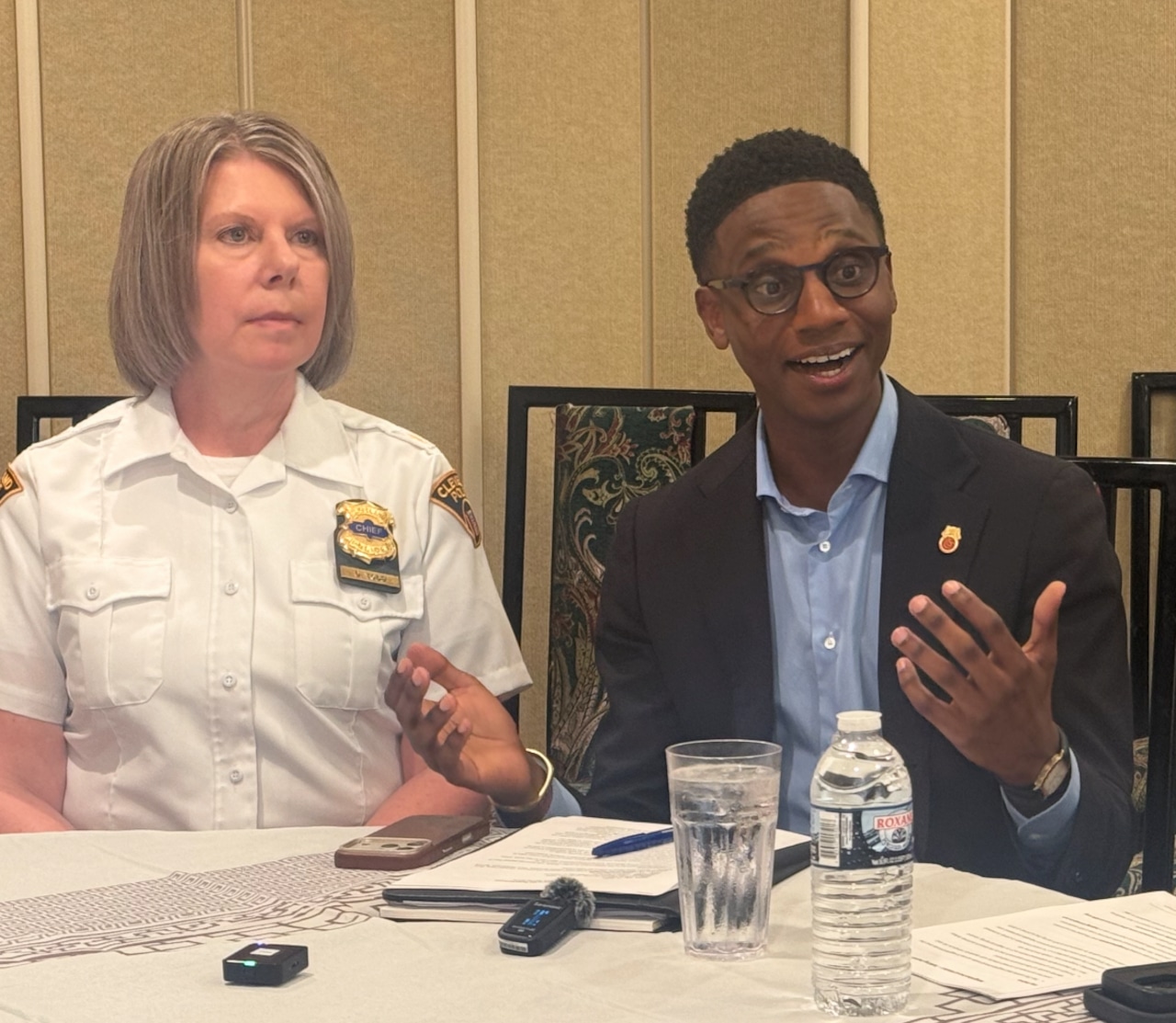
Mayor Justin Bibb, flanked by police leadership and cabinet members, outlined what he called an “all of government approach to keep our streets safe this summer, to keep young people productive and busy this summer” during a briefing in AsiaTown.
The strategy includes a specialized summer violent crime task force involving local, state, federal and county law enforcement partners that has already begun operations.
Bibb said he asked the safety director and police chief to start working on this task force at the start of the year.
It will focus on arrests of repeat violent offenders, conduct traffic sweeps in crime hotspots and deploy specialized units targeting illegal firearms through the city’s crime gun intelligence unit.
Police Chief Dorothy Todd confirmed that homicide numbers remain on pace with last year, though the department is maintaining a solve rate of nearly 80%.
The city has historically dealt with violent crime during events where mass crowds congregate. These events sometimes end up in shots being fired or large fights that become untamable by law enforcement.
Last summer, a shooting broke out as thousands of people gathered downtown for a Browns game. Forty shell casings were found, and six people were injured.
Following an early closure of the city’s 17th annual Asian Festival on Sunday, Todd touched on the issue of overcrowding.
“When we have situations like overcrowding, we work with event organizers to determine what the best path forward is.”
The city’s initiative also includes enforcing curfew laws through a newly established Street Nuisance Crime Enforcement (STANCE) unit that addresses lower-level crimes identified as predictors of violence. The unit was established last year to prevent car break-ins and other property related crimes.
“We have to make sure our young people are not out after dark because we know a lot of bad things happen at those times,” Todd said.
Youth engagement forms a major component of the summer strategy. More than 9,000 young people registered for summer employment opportunities, with 6,000 from Cleveland. The city will provide 2,200 jobs paying $13.50 per hour for up to 25 hours per week for six weeks, plus 160 internships at $14 per hour.
The Cleveland Division of Parks and Recreation expanded pool hours to seven days per week from 1 p.m. to 7 p.m., up from five days last year. The department also offers free programming at every park and recreation center from June through August.
Angela Shute-Woodson, director of community relations, described the city’s “three on three” basketball initiative as an alternative to the traditional Hoops After Dark program. The program is not as formal as other basketball leagues as everyone is allowed to participate, officials said.
The program targets youth ages 10 to 21, including those returning from incarceration.
“Through our data we’ve learned that there are actually no incidents when we’re conducting three on three sessions,” Shute-Woodson said.
The city also touted its police hires, having added more than 300 officers since 2022 and bringing the department to over 85 percent of full staffing. A new academy class of 47 officers started May 11, with another class of 31 still in training. An expedited hiring event is scheduled for June 26 through June 28.
The department has 1,264 combined officers and recruits with a budget goal amount of 1,350.
Summer neighborhood walks will connect city departments with residents to address quality of life issues ranging from code enforcement to street lighting. Last year, these walks connected with over 2,500 residents and generated 22,000 service requests, Bibb said.
“Since we had one of the worst winters in a long time, there is a demand for folks to be outside,” Bibb said. “We are doing everything we possibly can to have safe spaces for seniors and making sure that public safety, building and housing, and every department can support community organizations to create those safe spaces.”