NHL
Vancouver Canucks’ offseason to-do list 2.0: It starts with a decision on Adam Foote
Source
nytimes.com
Now that Henrik and Daniel Sedin have been formally introduced as co-presidents and Ryan Johnson is settling into his new role as general manager, it feels as if this Vancouver Canucks offseason is about to properly restart.
For obvious reasons, a variety of key items — from contract negotiations with pending unrestricted free agents, restricted free agents and extension-eligible players to trade talks and the future of the coaching staff — have been in a necessary limbo as the club conducted its wide-ranging search for new hockey operations leadership.
Now, with just two weeks to go before the combine, five weeks until the draft and six weeks until the start of the next league year, time is getting short for the Sedins and Johnson to get their bearings, build out their staff, make a significant decision behind the bench and put their plans in place for a summer that will necessarily shape the foundation, for better or worse, of this latest Canucks rebuild.
Let’s begin to pivot our attention away from the GM search and focus on some of the big-ticket items on the to-do list for the Canucks’ incoming management team.
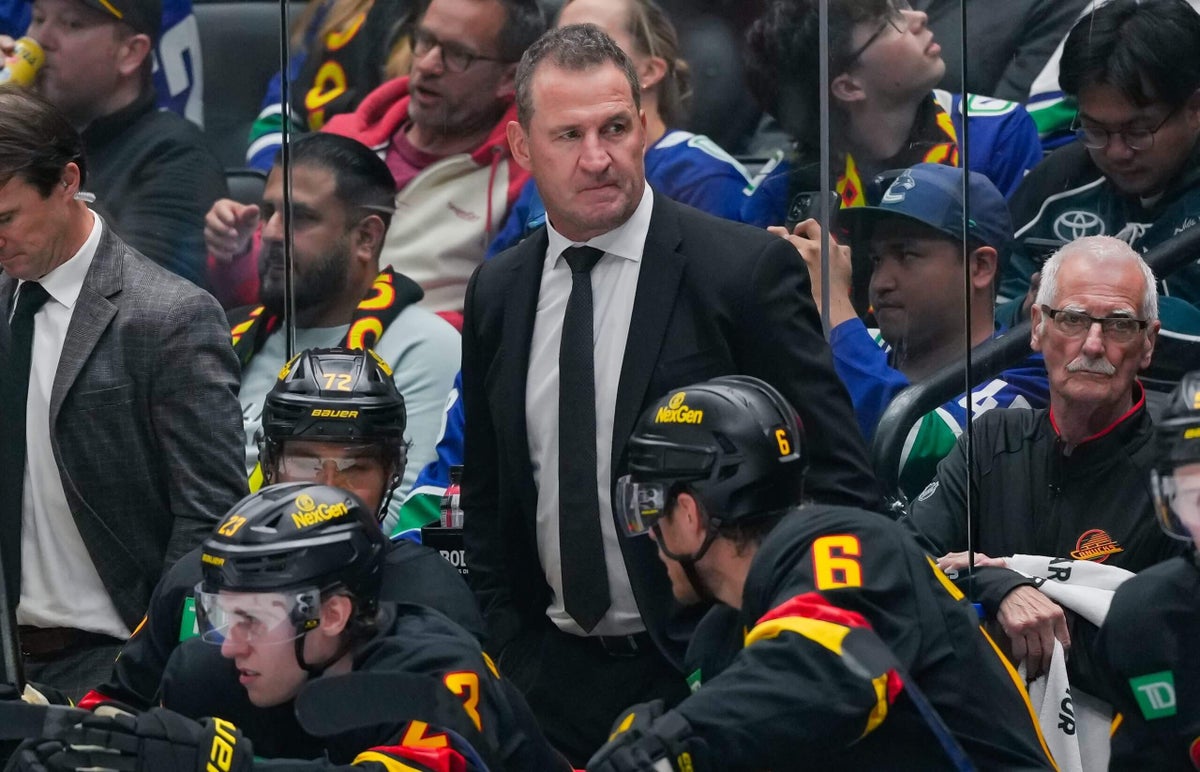
Clearly, the first order of business for the Canucks is to determine whether head coach Adam Foote will get a second season behind Vancouver’s bench.
Associated to that decision is navigating Manny Malhotra’s future. Vancouver’s AHL head coach is a former teammate of Henrik and Daniel, and the relationship between those three is close. Malhotra has also formed a tremendously successful and trusting partnership with Johnson.
Despite a difficult second season behind the bench in Abbotsford, Malhotra may have options this summer. At the very least, he’ll have leverage. His name has already been linked to the job in Toronto. In determining the future of Foote and his coaching staff, Vancouver will have to be mindful of the defensive aspect of maintaining Malhotra as an in-house option. Gary Mason of “The Globe and Mail” has already touched on the possibility that Vancouver would consider denying Malhotra permission to interview for vacant head coaching jobs, so this is clearly on the organization’s radar, at the very least.
The arguments for keeping Foote are, if we’re being totally honest, thin.
Foote is an able assistant coach and had an excellent two and a half seasons managing the defence and running the penalty kill on Rick Tocchet’s staff. He was also clearly out of his depth in handling a variety of challenging curveballs that were thrown his way as a first-year bench boss in Vancouver.
Incoming Canucks management can only do so much to influence the culture of this organization, at least in terms of the day-to-day feel of playing for the club. Culture must be set by the players themselves at the NHL level, and the head coach, ultimately, is the more impactful, consistent heartbeat of how a team operates daily than upper management can ever be.
Installing the right coach to develop young players during this rebuild, and to help ensure the work rate and guide the culture that the Sedins and Johnson discussed at great length in their introductory news conference last week, is their first test.
Johnson and the twins should sit down with Foote and discuss his plans for next season. Let him make the case directly for how he’ll improve, in terms of his on-ice approach, practice plans, the coaching staff he surrounds himself with and how he communicates with the fanbase.
Sit with that, evaluate it and then make your decision — whether to keep Foote, or promote Malhotra — before the combine begins.
While sorting through what’s next behind the bench, the Sedins and Johnson will also need to put their stamp on their hockey operations leadership group.
At the very least, the club has a lot of roles to backfill. With the Sedins moving up from their previous role as development coaches, the Canucks will need to make hires in player development. With Johnson moving into the GM’s chair, the Canucks will need to identify a replacement assistant general manager to run the AHL team and to handle some of Johnson’s vacated pro scouting and player personnel portfolio.
The club has also lost Jim Rutherford’s experience, executive decisiveness and relationships, with the former president withdrawing from the day to day and becoming an adviser. And ex-GM Patrik Allvin brought a fair bit of scouting acumen and administrative heft, which the club will need to replace, too.
And that’s just to run in place. Then we get into whether or not the club will replace existing assistant general managers or other staffers, and what the hockey operations department will require to optimize their performance significantly in the years ahead.
As this rebuilding era kicks off, Johnson and the twins would also do well to consider their skill sets, how they complement one another, and in what specific areas the club could use some additional help. A full audit of what’s worked for the organization, and where the club has fallen short, would seem like an obvious and necessary step to undertake over the course of this offseason.
From the outside looking in, I’d argue that the Canucks’ single biggest shortcoming as a hockey operations group has been in the realm of value management and strategic foresight. This club is consistently reactive in terms of selling low, buying high and seemingly never positioning itself to take advantage of changes in the NHL landscape.
Hiring a young lawyer or contracts specialist with knowledge of the collective bargaining agreement and some facility navigating the Research and Development side — in the mold of recently departed Toronto Maple Leafs assistant general manager Brandon Pridham, but most likely less expensive — would seem like a tap-in necessity for Johnson and the twins to consider, as they shape this front office in their image.
Figure out which veterans to explore the market on and which to hold
The Sedins have already been asked at length about centre Elias Pettersson. It’s probably fair to say that the twins haven’t expressed a ton of sympathy for Pettersson, nor have they gone to bat for him particularly.
Instead, both of the twins have been pretty specific about challenging Pettersson to be better prepared next season, and to focus more on being the best teammate he can be, as opposed to meeting some impossible standard set by his $11.6 million cap hit.
With Pettersson, Marcus Pettersson, Filip Hronek, Brock Boeser, Jake DeBrusk and both of Vancouver’s pricey goaltenders, the Canucks aren’t exactly set up to be a rebuilding team. All of these veteran players are attached to the sorts of deals — long-term, and with at least some variety of no-trade or no-move protection — that you sign players to when you’re trying to surround an elite core with the necessary supporting talent to get over the hump.
The Canucks are going to need to make some significant changes accordingly, changes motivated more by maximizing value and clearing the decks of depreciating asset capital as they go about building a new core.
Working through which veterans the club can afford to keep around during this rebuild, the way Brendan Gallagher and Josh Anderson remained with the Montreal Canadiens during their recent accumulation phase, and which players the club is better off monetizing for futures and younger, less expensive NHL players on an accelerated timeline, has to begin now.
All of these deals will be complicated, three-dimensional transactions as a result of the no-move or no-trade protection involved. These won’t be open auctions, in which any NHL team can bid.
The more complicated the trade, the more runway a club requires to get its ducks in a row with an eye toward maximizing value. Those decisions need to be made in earnest before the combine, to facilitate the relevant conversations with agents and rival teams.
And those decisions have to be based on the value proposition at hand, far more so than they’re based on the more basic hockey considerations.
Get ready for the combine
This is easily the most important draft for the Canucks this millennium.
At No. 3, Vancouver has the highest pick the franchise has owned in 27 years. The Canucks have four picks in the top 50. They have 10 picks overall.
What comes next should provide a foundation of young talent and asset wealth capable of fuelling this rebuild, which raises the stakes, of course, for the final stages of the evaluation process.
Daniel is already over in Europe watching the likes of Viggo Björck and Ivar Stenberg, both of whom could well end up being considerations for Vancouver with the third pick, at the World Championship. And on May 31, the combine will open in Buffalo, and last for a week, during which time period the Canucks — and the 31 other NHL clubs — will gather with agents, hockey operations leaders from around the league and the top draft eligible prospects for the 2026 draft.
Over the course of the week, these players will take part in interviews. They’ll wine and dine with the teams considering them. The league will conduct fitness testing and provide teams with official measurements. And the Canucks, with those 10 picks, will have to cast an especially wide net in how they utilize their time in Buffalo.
Vancouver’s runway here is getting short, and the club’s new hockey operations leadership group will have to be laser-focused on preparing for and maximizing the informational, relationship-building and evaluative opportunity that the combine offers.