NCAA Football
Rutgers is quietly using your tax dollars to lure college athletes. Here’s what to know.
Source
nj.com
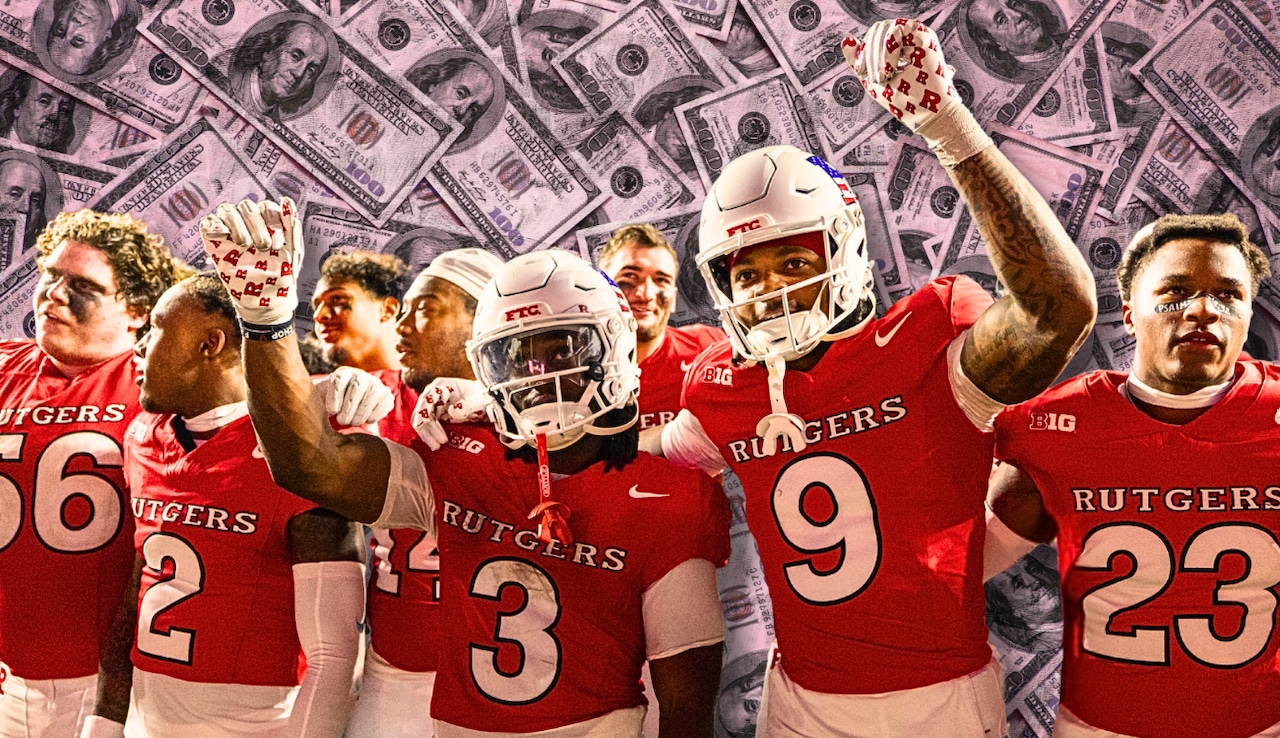
New Jersey taxpayers are now officially contributing to Rutgers University’s ongoing push to compete in the Name, Image, and Likeness (NIL) arms race dominating college sports.
As part of a record $60.7 billion state budget signed last month by Gov. Mikie Sherrill, New Jersey lawmakers for the first time agreed to earmark $5 million in taxpayer money directly for Rutgers athletics.
The line item — found on page 213 of New Jersey’s state appropriations budget — is part of $373.5 million total designated for Rutgers’ New Brunswick campus in 2026-27.
The measure is listed under the heading “Events Attraction and Marketing.” But during budget negotiations, the $5 million funding request was identified in a resolution for “Name, Image and Likeness,’' NJ.com has learned.
The money is expected to support the athletic department’s NIL fundraising efforts, including personnel salaries and marketing and branding opportunities. However, university officials said the cash won’t go directly to athletes.
“The $5 million state appropriation to Rutgers is for marketing, events and attractions and will not be used for NIL funds directly paid to student-athletes,” Rutgers spokeswoman Dory Devlin said in a statement sent to NJ.com.
For decades, student-athletes were barred from profiting off their own fame, limited instead to a school-issued scholarship. That changed in 2021, when the NCAA revised its rules to give college athletes the legal right to control the commercial use of their name, image, and likeness.
The shift opened the door to real money: players can now sign autographs, land endorsement deals, and cash in on their social media followings.
In turn, NIL compensation has been the most crucial recruiting tool for schools to attract top-level athletes and field elite teams. But at Rutgers, keeping pace with the Big Ten’s NIL arms race has proven difficult. Since arriving in August 2025, Rutgers athletic director Keli Zinn has made fundraising for athlete compensation a top priority.
“I won’t tell you the exact goal (for NIL) but I will tell you it was aggressive and we were probably half of where we should have been,” Zinn told NJ.com during a Rutgers Rant podcast in March. ”We had quite a bit of work to do really early on and we started that (by) getting in front of both current corporate partners but more specifically new corporate relationships and helping them understand that student-athletes and the Rutgers brand has some real marketing potential."
The $5 million allotted to Rutgers athletics marks an extraordinary step in asking taxpayers to help subsidize a college sports department. Other states have considered similar measures, including Wisconsin, where Gov. Tony Evers signed legislation that provided $14.6 million in taxpayer funding for facility debt service at the University of Wisconsin’s athletic department. The public funding reportedly allowed the school to spend its existing dollars to directly support NIL.
Meanwhile, Rutgers continues to face broader financial pressures. At its Board of Governors meeting last week, school officials called for a hiring freeze while implementing a tuition hike of nearly $450 per student. It was part of a $6.2 billion operating budget approved by the board for fiscal year 2026-2027.
A Rutgers official said 3.4% of the university’s operating budget for academic year 2026-27 is allocated to the Scarlet Knights program.
University officials added that state funding accounts for approximately 22% of its overall university revenue. This year’s state budget calls for about $1.108 billion in state support, an increase of $36.6 million.
The Rutgers athletic department received $42.1 million in state support over the course of former Gov. Phil Murphy’s term, according to the school’s financial reports between fiscal years 2018 and 2025. Rutgers athletics received $114,492 from the state budget between 2010 and 2017, which spanned former Gov. Chris Christie’s term.
The department’s $8.02 million subsidy in fiscal year 2025 went toward paying fringe rate costs, which university officials said are the highest in the Big Ten.
The state’s fiscal year 2023 budget signed by Murphy included $100 million to help fund the renovation of Rutgers’ basketball arena and kick-start a multimillion-dollar indoor football practice facility.
But the $5 million appropriation from New Jersey for fiscal year 2027 marks the first time that state taxpayers are directly supporting the school’s in-house NIL division. Rutgers’ newly launched R NIL includes at least four staff members, including a chief operating and revenue officer who earns $525,000 annually, university salary records show.
“We are grateful for the Legislature’s and Governor’s investment in Rutgers and will continue building on that support as we advance our mission and strengthen the university through every available means,” Devlin said in the statement.
Meanwhile, concerns regarding Rutgers’ athletics spending have already generated controversy this year. An NJ.com report in February revealed the athletic department deficit topped $70 million for the third time in five years in 2024-25, after the state university spent a record $193.8 million.
It resulted in Rutgers’ athletics deficit swelling to $516.9 million since joining the Big Ten in 2014-15.
“Obviously our expenses have exceeded and outpaced our revenue and in some cases year over year to a pretty significant degree,” Zinn told NJ.com in February. “That’s a piece that we will spend quite a bit of time on, understanding that the current fiscal year that we sit in there was a $20.5 million expense with the revenue sharing (for athletes).”
The NJ.com reporting also showed how the cost of competing in modern college athletics has skyrocketed since Rutgers joined the Big Ten more than a decade ago, spurring the state university to spend more than $1.35 billion in athletics over the last 12 years. The spending spanned coaching salaries ($506 million), recruiting, athlete meals and scholarships ($260 million), and $143.8 million in facility debt.
And those figures did not include millions more dedicated to NIL deals being distributed to athletes in today’s modern era of revenue sharing.
In a letter to lawmakers in May, university officials told the state Assembly budget committee there are two payment streams for the school’s 730 athletes across 24 men’s and women’s intercollegiate sports. As part of the House vs. NCAA settlement approved in June 2025, major-conference schools are allowed to pay athletes directly up to 22% of the average revenue generated from media rights, ticket sales and sponsorships. That figure for Rutgers and its Big Ten counterparts was $20.5 million in the 2025-26 academic year and is expected to increase 4% over the next two years.
In addition, athletes are allowed to profit from NIL through third-party deals and private contracts with outside parties.
“NIL agreements are private contracts between the student-athletes and outside parties — not the university," Rutgers officials said. “NIL compensation does not come from the university’s budget, and Rutgers neither pays nor controls those funds.”
The appropriation is part of the $60.7 billion spending budget signed by Sherrill on June 30. Sherrill has the ability to veto individual line items in the budget. Her office deferred comment to the state Legislature.
The Assembly Democratic Office did not directly answer questions but said the budget’s more than $2 billion to higher education will help keep Rutgers affordable, strengthen its research competitiveness, restore key programs, and support efforts to attract more students.
“The additional investment for marketing will allow Rutgers to showcase the ways they change the lives of the students and community and encourage more people to come and invest in Rutgers and New Jersey,’' the office said.