NHL
More NHL teams than ever are without a captain. Does wearing the ‘C’ still matter?
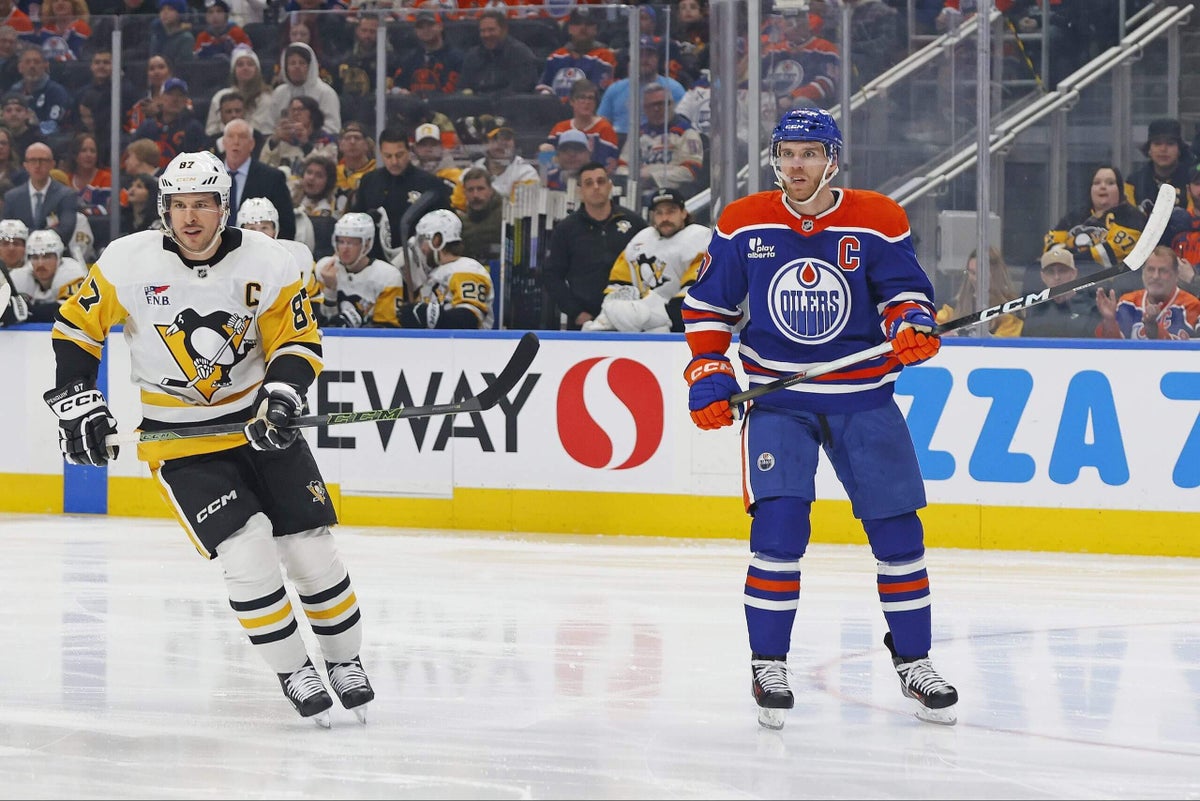
Source
nytimes.com
Claude Giroux was 25 when he was named captain of the Philadelphia Flyers. Saddled with the front-facing responsibilities that accompanied the prestigious role, the young forward overextended himself early into his tenure.
“I was just focusing on the wrong things and trying to help out everybody, trying to be a leader off the ice and talking too much, and then I just forgot to play hockey,” Giroux said. “When I was named captain, I think it’s (then-general manager) Paul Holmgren that told me: ‘You’re not captain because of what you say. It’s the way you play. So, just focus on that.’ And that was a big turning point in my career.”
Giroux, now 38, has gained plenty of leadership experience since the beginning of his nine years wearing the “C” for the Flyers. And as the newly re-signed elder statesman on an Ottawa Senators team defined by up-and-coming talents who look toward Giroux to guide them along, the veteran will surely help educate whomever his current club names as its next captain.
The Senators are hardly alone in their need to fill a dressing room void. As of Wednesday morning, nine fellow NHL teams similarly lacked a designated captain: the Chicago Blackhawks, Columbus Blue Jackets, St. Louis Blues, Boston Bruins, Vancouver Canucks, Anaheim Ducks, New York Islanders, Los Angeles Kings and San Jose Sharks. According to the league’s statistics and information department, these 10 vacancies are believed to be a record.
A handful of these teams lost their leaders in recent months. Longtime Kings center Anže Kopitar retired this spring, capping a 20-year career that included 10 seasons as their captain. Boone Jenner, Radko Gudas and Anders Lee left the Blue Jackets, Ducks and Islanders, respectively, to sign elsewhere in free agency. Finally, despite the honor bestowed upon them at their previous stops, Brady Tkachuk (Senators), Quinn Hughes (Canucks), Brayden Schenn (Blues) and Nick Foligno (Blackhawks) have all been traded since mid-December.
It’s not the first time the NHL has seen such significant captain movement. Remarkably, six were traded during the lockout-shortened 1994-95 campaign. But open captaincies don’t stay that way for long. Of those 10 C-less teams, only the Bruins and Sharks have lacked one for at least a full season, with the former having traded Brad Marchand in March 2025 and the latter losing Logan Couture to injury-related retirement a month later. And seven teams named new captains during the 2024 offseason alone, suggesting that a similar rush of announcements might come before next season.
“That’s the changing of the guard, right?” Foligno said. “There’s a bit of a push right now for the next wave of players to take over.”
Though the idea of the “C” undoubtedly holds a special place in hockey lore, some wonder whether this gravitas will lead to delayed decisions. Schenn and Foligno were aging veterans who were called upon to lead teams in transition, but Hughes and Tkachuk actively sought greener pastures after receiving the reins as young stars in their markets. Now, they’re seen as faces of the NHL’s emerging player empowerment era, which could lead their former clubs to think more about who should be given the sport’s most honored letter — and how soon.
“Teams are waking up a little bit and just making sure that they know what they have,” said former Carolina Hurricanes captain Justin Williams, now a front-office advisor for the 2026 Stanley Cup champions. “And they have the commitment from the player, as well, to be there. Because you don’t want to just name a captain who’s on a one-year or two-year contract and then he’s out the door, right? So, you’ve got to have a guy who’s committed to the team, committed to the city as well.”
An NHL captain is more than the face of a team for marketing purposes. He often serves as a go-to interview with media members and frequently talks to on-ice officials about rulings and other in-game issues. He can act as a liaison between the coaching staff and the dressing room to settle conflicts, and as a social coordinator in organizing off-ice activities to bring teammates together.
“A lot of times the captain was the best player and/or the guy that was the most veteran, right?” said Foligno, who also captained the Blue Jackets from 2015 to 2021. “That just everyone respected. Now it’s more who has the pulse of the group and who understands the direction that we’re going and can kind of be the go-between, between the coach and the players, right? And he has to be a great communicator, and I just think that that’s where the captains are now.”
Indeed, the captain doesn’t have to be a team’s best player. But it’s also difficult to justify giving the letter to a fringe roster member.
“Otherwise, you’re just a glorified assistant coach,” said broadcaster Ray Ferraro, a former Atlanta Thrashers captain. “So, the player has to be impactful.”
Those responsibilities have remained consistent throughout league history, even as some elements of the job have changed. In the 1950s, according to newspaper archives, NHL captains annually voted on honors such as individual player awards, All-Star teams and the most popular referee. In the present, however, there’s more emphasis on teams’ leadership structures and not solely on one player shouldering the load.
Teams such as the Bruins have gotten by with leadership committees and not a de facto leader. After Marchand was traded to the Florida Panthers, the Bruins relied on three alternate captains: forward David Pastrnak and defensemen Charlie McAvoy and Hampus Lindholm.
“I’ve always said I wanted a captain,” Bruins head coach Marco Sturm said in May. “But now, being through that (for the) first time as a head coach not having a captain, I thought it went real well. Maybe because guys were really close, the leadership group, I thought, did a good job overall. Everyone had their input. There was no outsider. They always kept it really tight. I actually didn’t mind it.
“But having said that, that will be a conversation to have with (Bruins GM Don Sweeney) — how we’re going to move forward. But, personally, I liked how we handled — and especially the players, how they handled — the situation all year long.”
Those groups aren’t always limited to players wearing letters on their jerseys. But there can be such a thing as too many voices, or ones who are miscast.
“It’s less about a figurehead and more about, like, an inclusionary leadership group,” said Ferraro, who succeeded current Senators GM Steve Staios as the Thrashers’ captain in 2001. “I see why they do it. And I see what the advantages are of it. But I don’t think you necessarily have to expand your leadership to two or three or four players to include a bigger group if that’s not what they are.”
In Ottawa, where Giroux serves as an alternate captain, the Senators intend to name a replacement for Tkachuk. They certainly do not lack for options, including two young, bright talents in Jake Sanderson and Tim Stützle.
“And you have Shane Pinto, Ridly Greig,” Giroux said. “You have (Thomas Chabot) that’s been here a long time, and Drake Batherson and Dylan Cozens. So, you have a lot of guys that can bring a little bit of everything. But you know what? Leadership is not about one person. It’s about a lot of guys doing their job.”
It remains to be seen how the nine other teams will fill their vacancies, though many expect two to soon tap their leading superstars. The 20-year-old Macklin Celebrini is already a Sharks alternate captain and recently captained Team Canada at this year’s IIHF World Championship. Meanwhile, after recently signing a five-year, $75 million contract extension, the Blackhawks’ Connor Bedard told reporters it would be “extremely special” for him to become Chicago’s next captain.
The Islanders might not be as quick to do the same with defenseman Matthew Schaefer; head coach Peter DeBoer recently told The Athletic that they didn’t want to load up the 18-year-old’s “plate too early,” lest they risk Schaefer’s overextending himself, as Giroux did. For Williams, the former Hurricanes captain, such patience can be a virtue.
“The league is getting younger; that’s a pure reflection of that,” Williams said. “I think it’s smart. People are waiting to see, and I don’t think that’s an issue at all.”
Even if teams such as the Islanders take their time, the honor of being captain is valued across the NHL.
“There’s also a ceremony, a tradition of having the captain, and I don’t think our sport would go away from it,” Ferraro said. “Maybe they would, but I don’t think so. I think there’ll always be a captain. But this time right now, to me, it feels transitional.”
Foligno agreed. Pointing to the league’s long history of championship-winning captains — only the 1969-70 and 1971-72 Bruins have hoisted the Cup without one — he found it difficult to imagine a time when teams could ditch the “C” altogether.
“I think there’s a direction and there’s a rallying point to that guy you play for,” Foligno said. “Look at the players in Carolina this year. You’re telling me they didn’t play for (seven-year captain) Jordan Staal and how he made them feel? And that guy is an ultimate captain. So you know, you find a guy like that, you hold on to him because they’re what a team is all about. And you could tell why that team won. That was a family by the end of the year. It was incredible.”