MLB
A 3-time All-Star pitcher for the White Sox, Red Sox and Pirates died
Source
newsweek.com
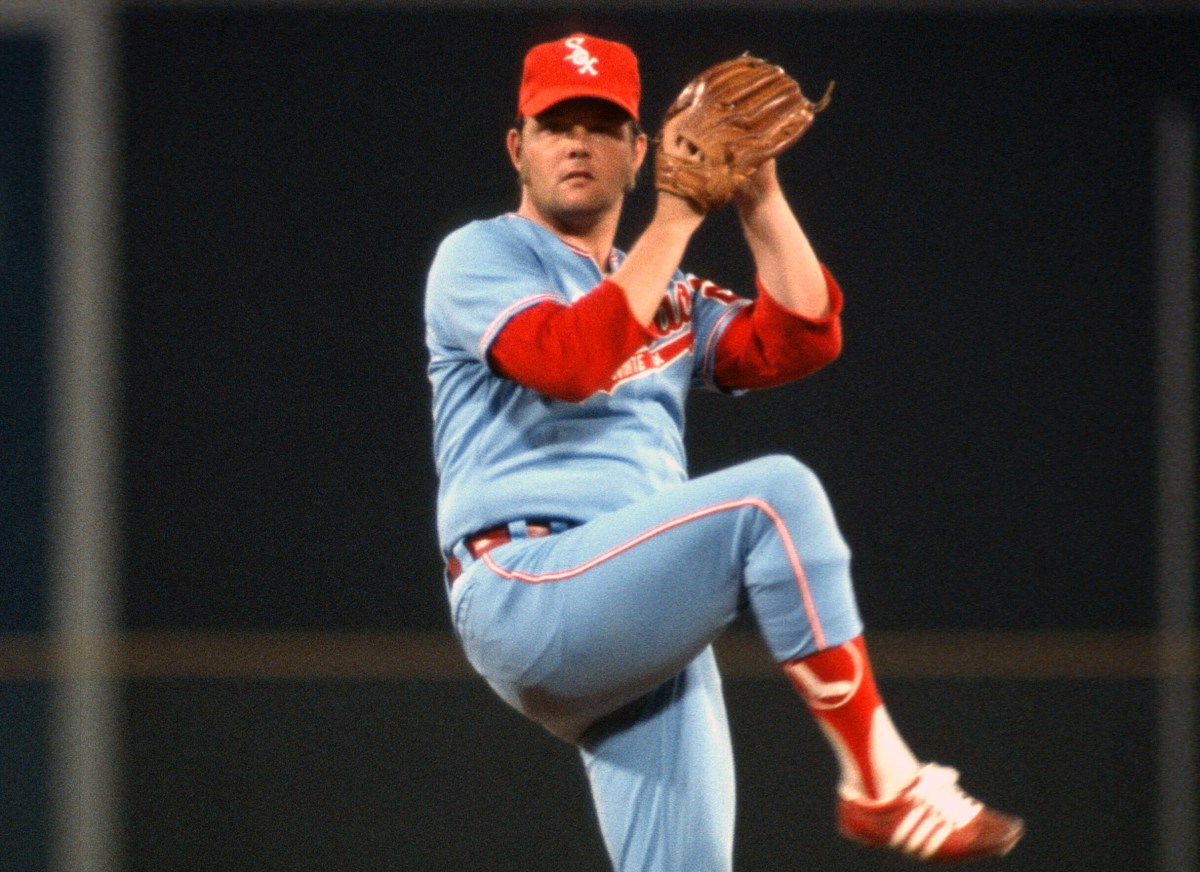
Wilbur Wood, who set the standard for pitching durability en route to three All-Star Game appearances over 17 seasons in Major League Baseball, died Saturday. He was 84.
For a stretch in the early 1970s, Wood was the most relentlessly available pitcher in the American League — a knuckleballer who showed up, took the ball, and kept taking it, again and again.
His 376.2 innings pitched in 1972 read like a misprint. Yet Wood followed up that season by pitching 359.1 innings in 1973, a workload that will never be replicated in the modern game.
A left-handed pitcher, Wood was 19 years old when he debuted with the Boston Red Sox in 1961. The pitch that would come to define his career — the knuckleball — was still years out of reach. Without the pitch, Wood struggled in parts of four seasons with the Red Sox (1961-64) and Pittsburgh Pirates (1964-65), going 1-8 with a 4.17 ERA in 73 games.
More news: Former Major League Pitcher, College Hall of Famer, Dies
A fateful trade in October 1966 from Pittsburgh to Chicago set Wood on a path to stardom. With the White Sox, Wood learned an important lesson about the knuckleball from veteran pitcher Hoyt Wilhelm.
"His big point was if you’re gonna throw a knuckleball, you have to throw it as your main pitch; it has to be thrown 60, 70, 80 percent or more – in other words not mixing in curveballs or fastballs, with knuckleballs being an extra pitch,” Wood said in a 2022 interview.
Wood pitched primarily out of the White Sox bullpen from 1967-70, posting a 2.49 ERA and 56 saves over 292 games. That led pitching coach Johnny Sain and manager Chuck Tanner to promote Wood to their rotation in 1971.
From 1971-75, Wood won 106 games, working an average of 336.1 innings a year. Nearly 30 percent of Wood’s starts during that five-year period (66 of 224) came while working on two days’ rest or fewer.
The knuckleball, thrown on a pitcher's fingertips in order to induce as little spin as possible, exerts less force on the arm than any other pitch. As a result, Wood's arm held up amid his rigorous workload.
Wood’s career wound down in the late 1970s when his arm finally registered the cumulative weight of all those innings. He retired with 164 wins and a 3.46 ERA, numbers that undersell the outlier he was in his prime.